Mold and water damage restoration prevents further damage. Mold is a type of fungus that can be found both indoors and outdoors in areas with sufficient moisture.
Indoors, mold usually appears in damp, humid places with leaky pipes or water damage, as well as in spaces with inadequate ventilation.
It can grow on various surfaces – wood, paper products, cardboard, wallpaper, insulation, drywall, ceiling tiles, paints, carpet, fabric, and upholstery.
Mold and Water Damage Restoration
The mold and water damage restoration process should be done correctly to improve the indoor air quality of your home or commercial property.
Beyond the visible damage, mold growth in areas with standing water or high moisture levels can compromise structural integrity and affect indoor air quality.
Excessive moisture from issues such as a leaky roof, plumbing leaks, or moisture seeping into walls can contribute to mold infestation materials, making the environment hazardous over time.
Flood water or sewage cleanup can introduce contaminants, requiring special care and thorough treatment to prevent mold and bacterial growth.
The water extraction and drying process, including the use of high-efficiency particulate air (HEPA) filters, can help reduce mold spores, ensuring a healthier indoor atmosphere.
Identifying mold
In general, mold has a musty smell, which may help discover small or hidden infections.
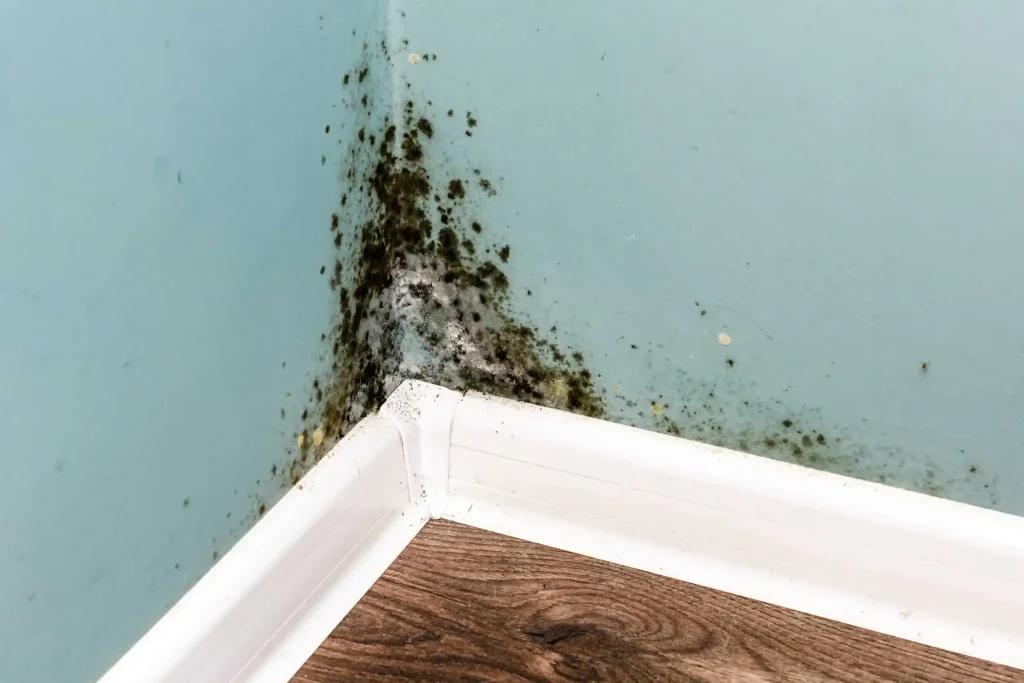
Its appearance may be powdery, furry, or slimy, and it can be different colors, including gray, black, green, blue, white, and yellow.
Most common indoor molds
There are many different types of molds. Among the ones that can be found at home, the most common ones are:
 Green mold on wood – a sign of water damage. Trust our expert mold and water damage restoration services for a safe and healthy environment.
Aspergillus
Commonly found on food, it can appear as a green, gray, or white fungus with a powdery look.
It can cause a serious health problem known as aspergillosis.
Cladosporium
A typically green or black mold, commonly found on wood, fabrics, and in ducts.
Penicillium
Being one of the most common causes of fruit and vegetable spoilage, this mold saved millions of lives. This bluish-green mold was the original source of the first antibiotic, penicillin, which perfected the treatment of bacterial infections.
Consequences of mold growth
Mold can lead to many problems, from unsightly stains on walls and ceilings to significant structural damage to buildings. It’s essential to address any mold issue as soon as you discover mold in your home or workplace.
Ignoring it could result in costly repairs and even more severe consequences down the line. Mold removal should be a priority, as leaving it unchecked allows the problem to spread, which increases the damage.
Mold can cause property damage and pose serious health risks. When mold spores are inhaled, ingested, or come into contact with the skin, they can trigger a variety of reactions. For some, this might start with mild symptoms like a runny nose, watery eyes, or skin irritation.
However, for others, especially those with pre-existing health conditions, the effects can be far more severe. Respiratory difficulties, lung infections, and even life-threatening complications can arise if mold is not dealt with quickly.
This mainly concerns individuals with asthma, allergies, or other respiratory conditions. People with weakened immune systems—such as cancer patients, individuals with HIV infection, or those who have undergone organ transplants—are also at a heightened risk of experiencing severe health effects.
That’s why it’s so important to contact a mold remediation company immediately when you notice any signs of mold. Professional mold remediation ensures that mold is thoroughly removed and prevents it from returning.
Beyond just eliminating the visible mold, a good mold remediation company will also help you prevent mold growth in the future. This often involves identifying the root cause of the mold, such as water leaks or poor ventilation, and addressing these issues.
By stopping the moisture source, you reduce the chances of mold coming back and causing further issues. If you discover mold in your home, it’s best not to delay—acting fast can protect your property and health.
How to get rid of mold?
First, you should fix plumbing leaks and any other water problems as soon as possible. Mold thrives in moist environments, so eliminating the water source is critical to stopping mold from spreading.
Once you’ve dealt with the water issue, it’s important to ventilate the area. Open windows and doors to allow fresh air to circulate, which helps dry out the space and reduces moisture levels. Proper ventilation is a key step in mold remediation because it creates an environment where mold is less likely to grow.
When you’re ready to tackle mold cleanup, you must wear personal protective equipment, such as eye protection, an N95 mask, and rubber gloves.
Mold exposure can be dangerous, especially when dealing with toxic mold varieties like black mold, so taking precautions is necessary. Wearing the right gear will protect you from inhaling or touching mold spores during cleaning.
Removing Mold Problem
Scrub non-porous surfaces like tile, glass, or metal with a detergent and water mixture. This can help kill mold spores that have settled on the surface. However, the situation is a bit more complicated for porous surfaces such as ceiling tiles, carpets, or upholstered furniture.
Mold can penetrate deep into these materials, making it difficult to remove entirely. If you notice mold reappearing after cleaning, it’s best to dispose of these items altogether to prevent further contamination.
It’s highly recommended that you contact a mold remediation specialist for larger infestations or hard-to-reach areas. Mold remediation services are designed to handle extensive mold issues, ensuring that all affected areas are thoroughly cleaned and treated.
Specialists can also help identify hidden mold, which may be lurking behind walls or under floors, and ensure that the mold is completely removed as part of the restoration process.
Not only will they kill mold spores, but they will also take steps to prevent them from returning, giving you peace of mind. Dealing with mold alone can be overwhelming, especially if it’s spread throughout multiple areas of your home.
Many people use mold remediation services to handle the job professionally and safely. If you’re ever in doubt, it’s always wise to seek help from experts who know how to manage mold effectively and reduce the risks of future mold growth.
To bear in mind
- Mold may cause staining and cosmetic damage, and it may not be possible to clean an item so that its original appearance is restored.
- Do not paint moldy surfaces, as the issue will remain, and the paint will begin to peel.
- According to the U.S. Environmental Protection Agency (EPA), you should not clean mold by yourself if:
- The affected area covers more than 10 square feet.
- Contaminated water caused the mold growth.
- The mold has gotten into the HVAC system.
- You have health issues.
In these cases, you should hire an expert to clean up and remediate the affected areas.
Mold remediation is one of The Phoenix Restoration’s specialties. Our Professionals can easily detect the source of the moisture and effectively remove mold.
Contact us; we’ll gladly assist you with your mold and water damage restoration.